 Image 1 of 4
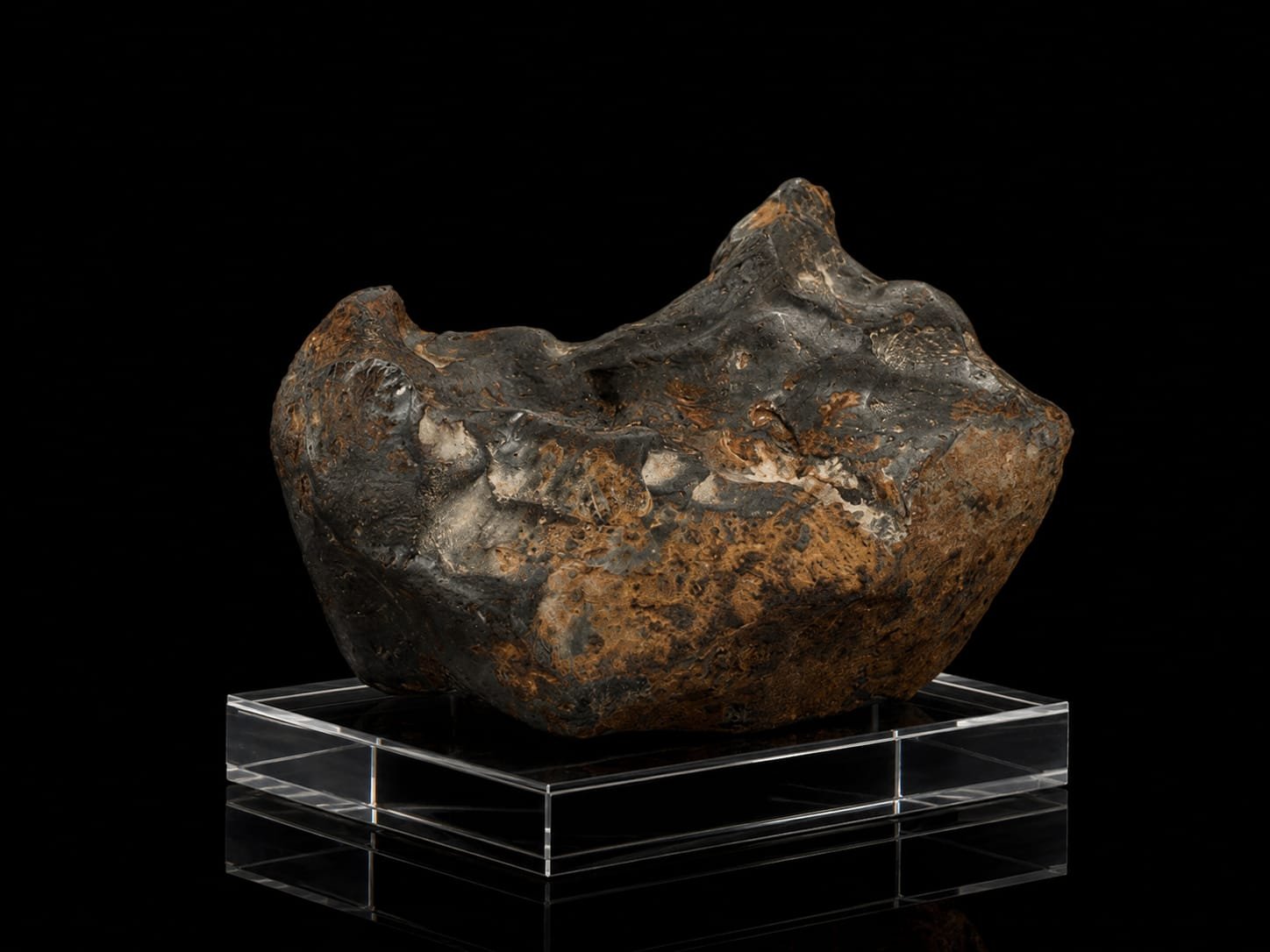 Image 2 of 4
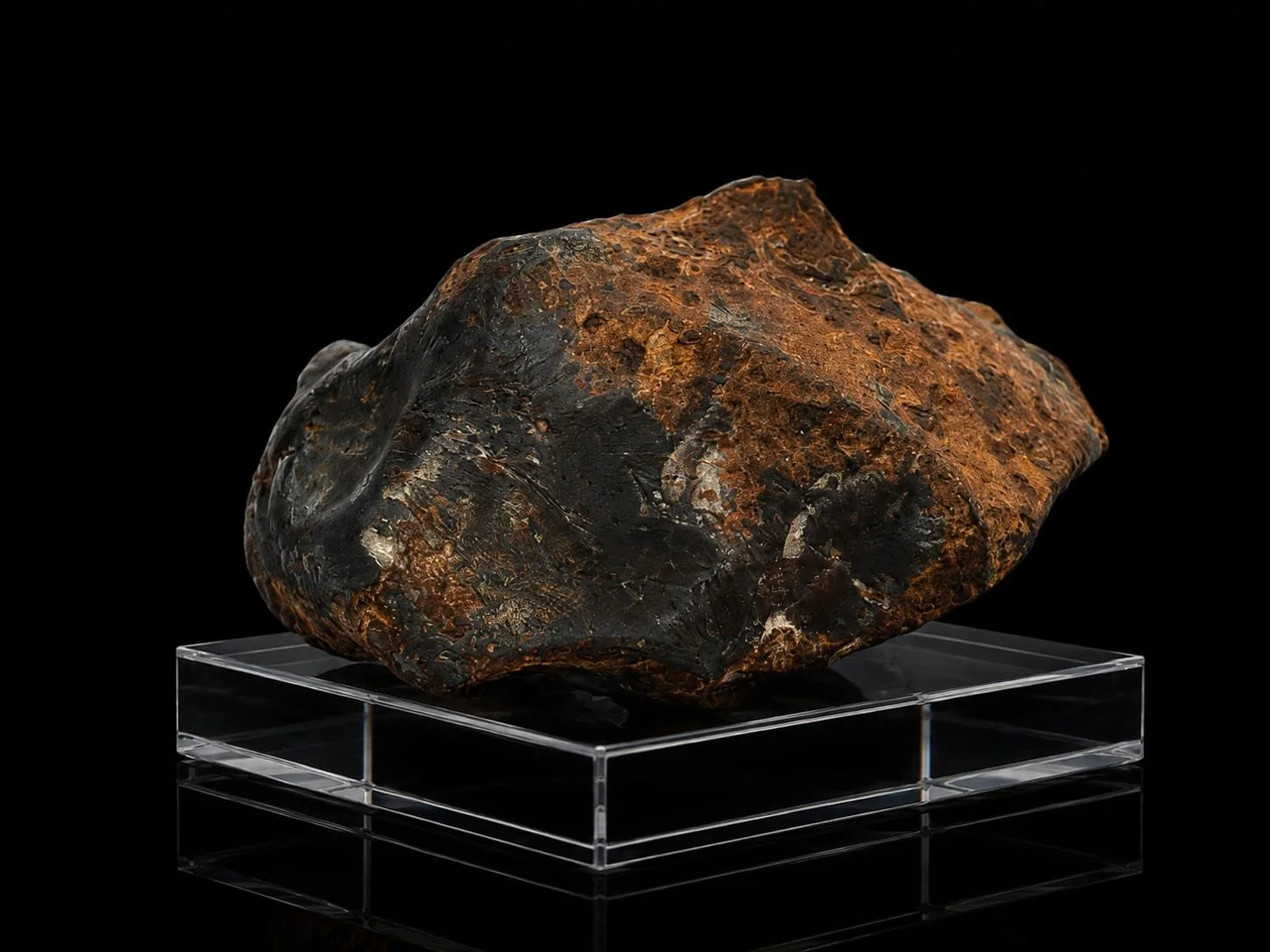 Image 3 of 4
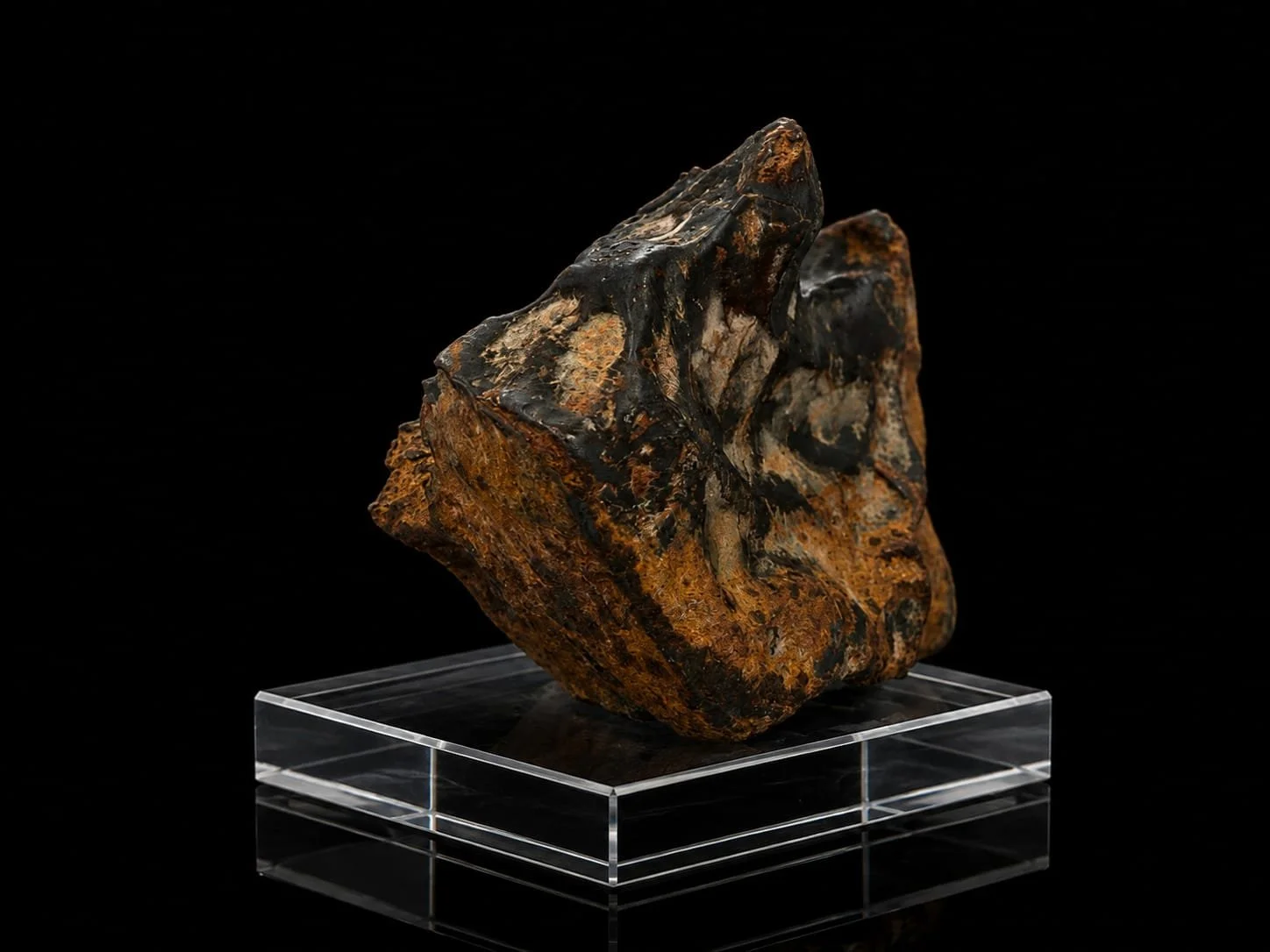 Image 4 of 4
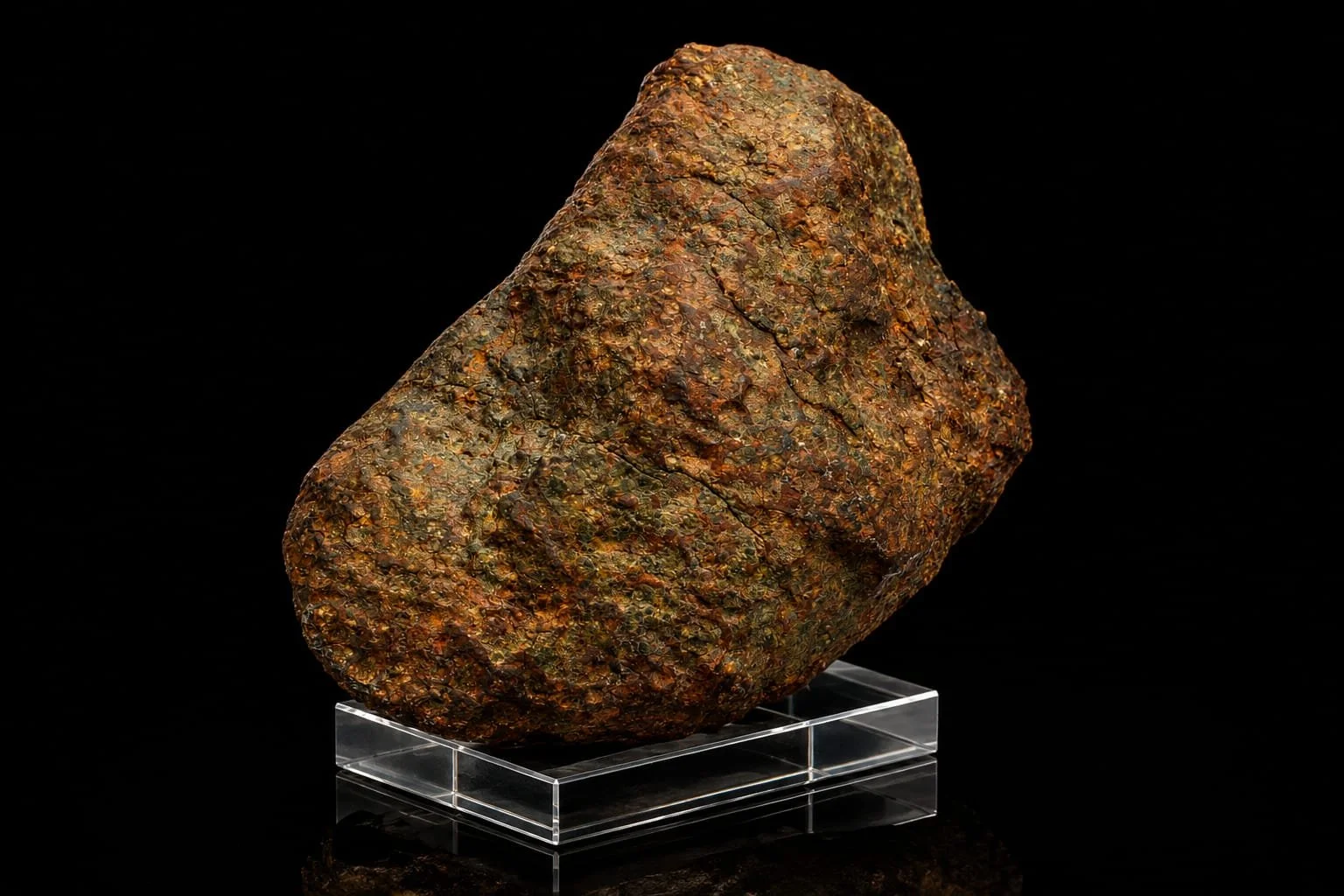
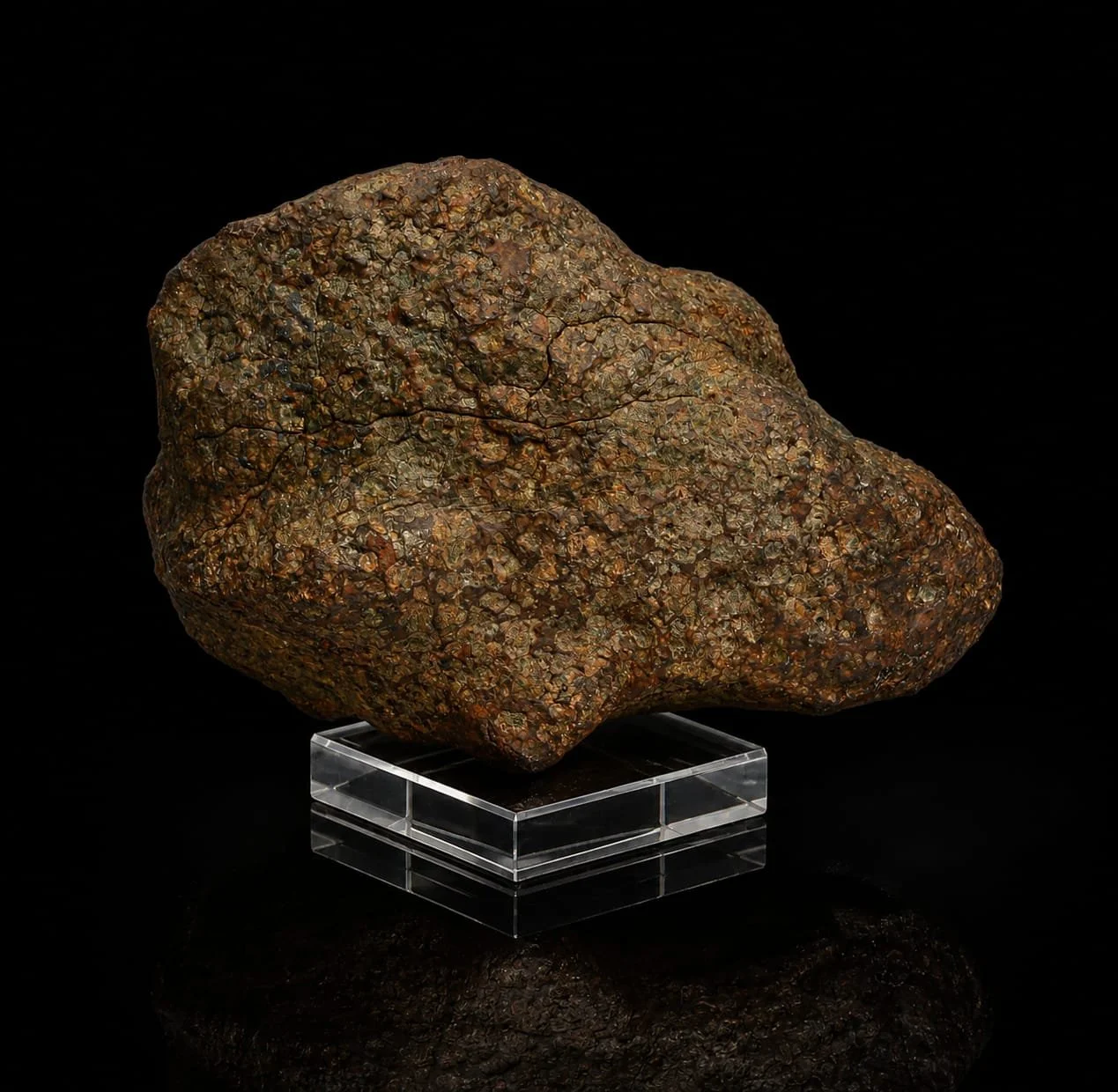
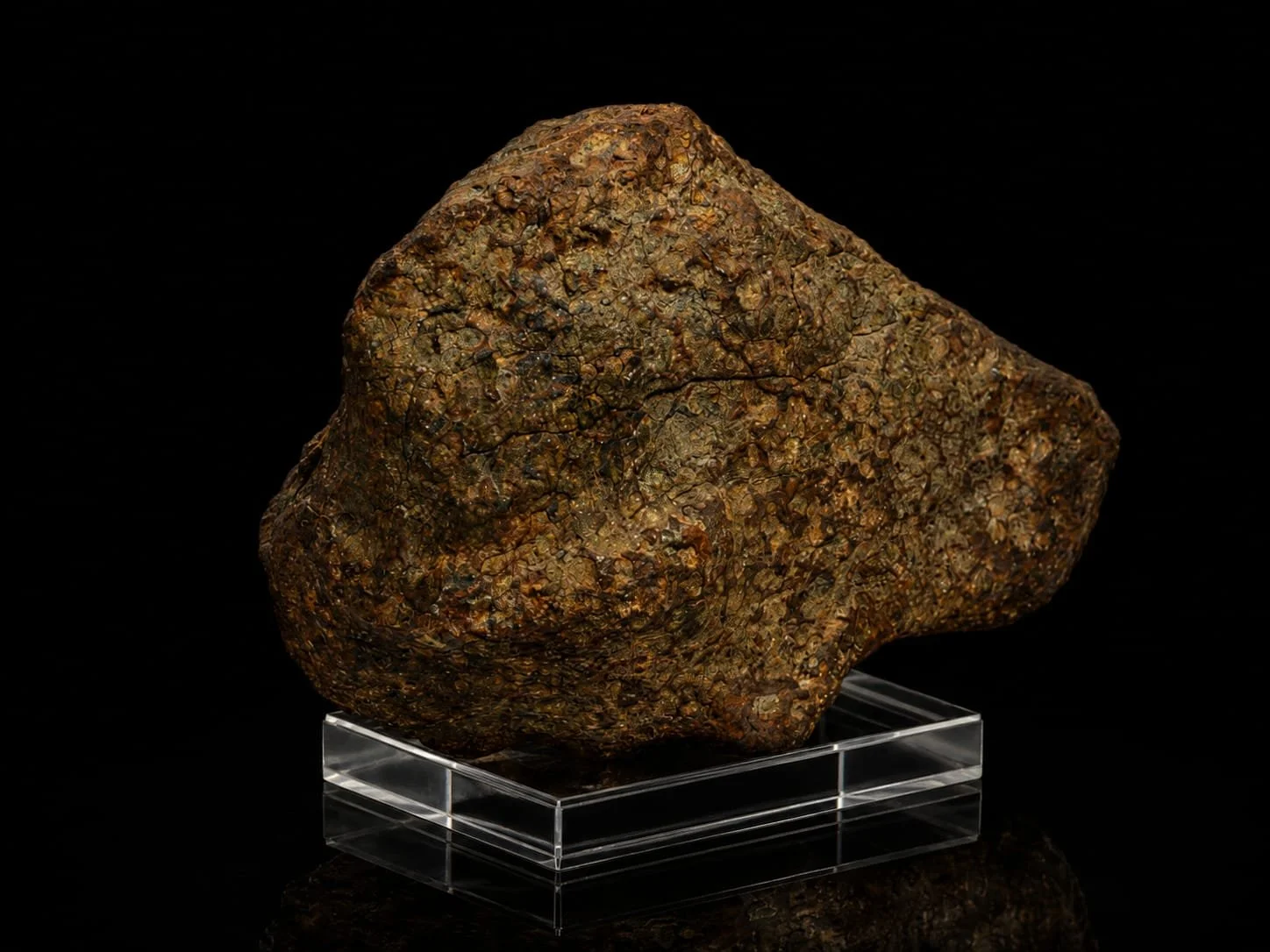
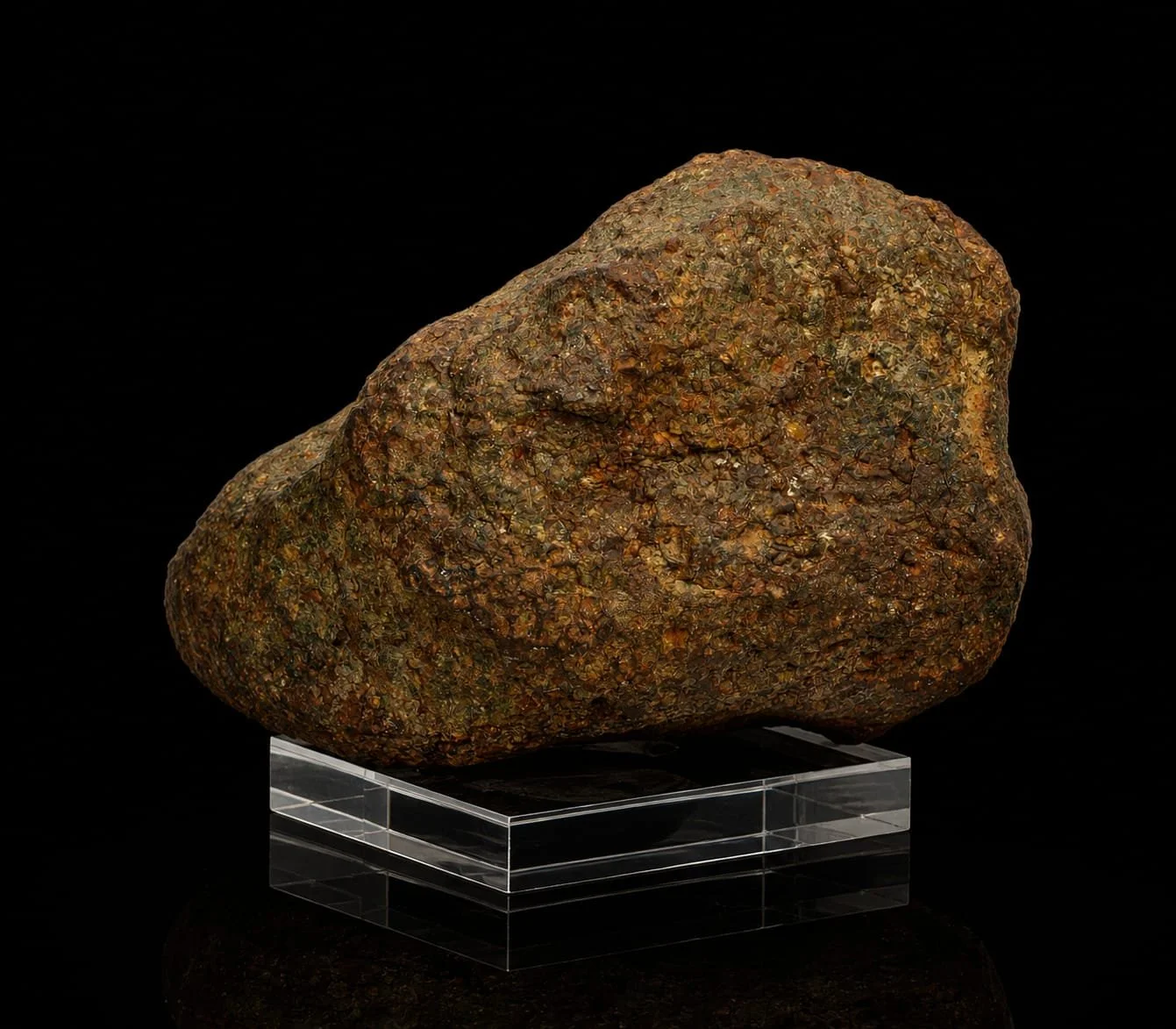
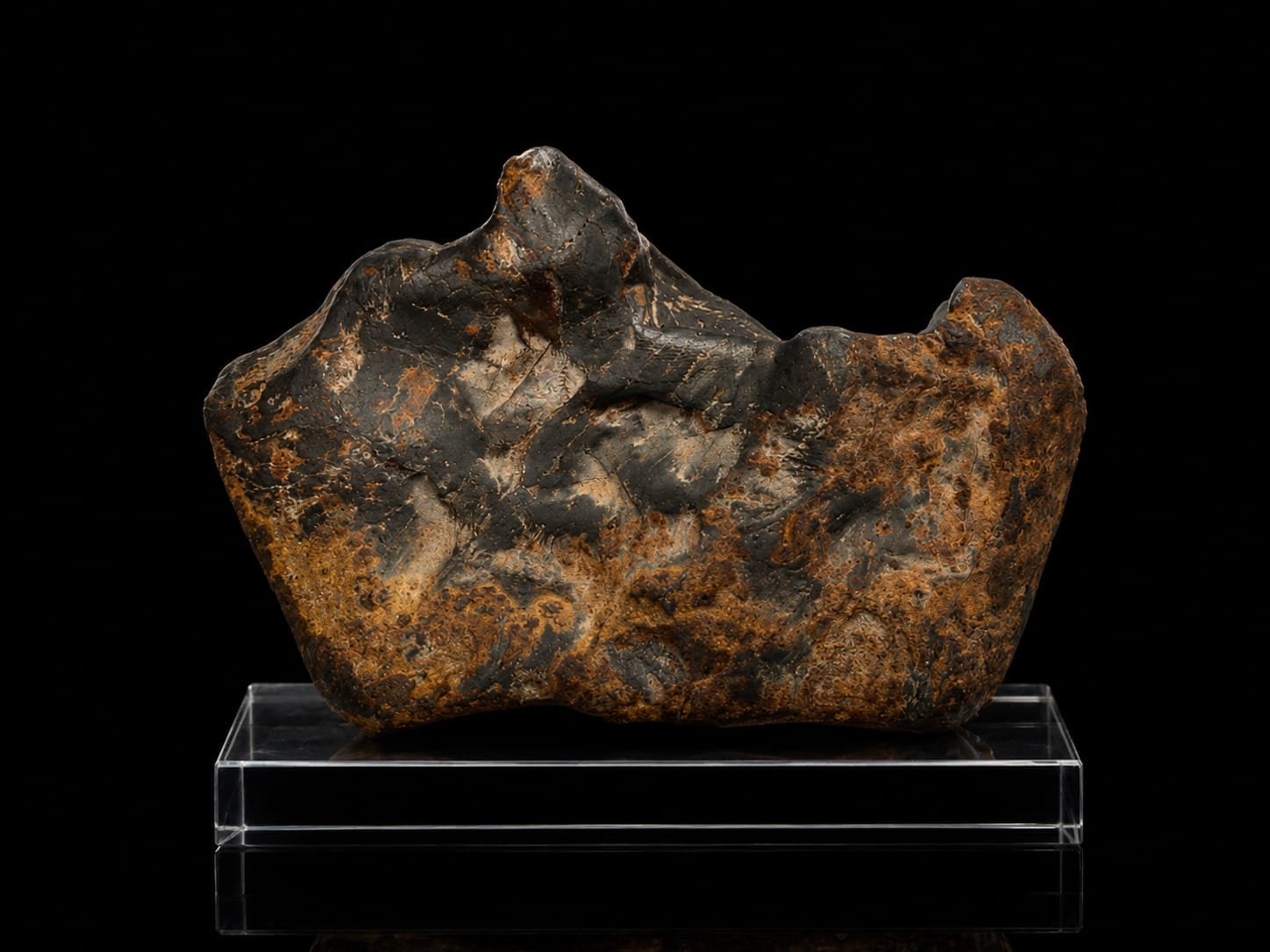
A 577 g specimen of the Imilac pallasite, found during a 2021 expedition to the Imilac meteorite strewn field in the Atacama Desert, Chile. Its composition is atypical: unlike most Imilac pallasites, which contain abundant olivine crystals embedded in an iron-nickel matrix, this specimen is composed entirely of iron, with no olivine inclusions. It has a blue fusion crust, a well-preserved surface formed as the meteorite passed through Earth's atmosphere.
The Atacama Desert is one of the few places on Earth where meteorites can often be found lying directly on the surface. It is the driest desert in the world, where rain falls only once every few decades and sediment accumulates extremely slowly. Against the pale sand and weathered rocks of its wind-swept plains, dark meteorite fragments stand out clearly. Some fell relatively recently, while others have remained on the surface for hundreds or even thousands of years. These stones attracted collectors as early as the 19th century, and one of the earliest famous discoveries was the Imilac meteorite, found in 1822. The cosmic body broke apart in the atmosphere, producing a meteorite shower over an area of approximately 8 km², and prospectors eventually recovered about one tonne of meteorite material.
Classification: pallasite (this specimen entirely iron, with no olivine inclusions)
Mass: 577 g
Find or fall: found
Location: Atacama Desert, Chile
Year: 1822 (first find)
This specimen found: 2021
A 577 g specimen of the Imilac pallasite, found during a 2021 expedition to the Imilac meteorite strewn field in the Atacama Desert, Chile. Its composition is atypical: unlike most Imilac pallasites, which contain abundant olivine crystals embedded in an iron-nickel matrix, this specimen is composed entirely of iron, with no olivine inclusions. It has a blue fusion crust, a well-preserved surface formed as the meteorite passed through Earth's atmosphere.
The Atacama Desert is one of the few places on Earth where meteorites can often be found lying directly on the surface. It is the driest desert in the world, where rain falls only once every few decades and sediment accumulates extremely slowly. Against the pale sand and weathered rocks of its wind-swept plains, dark meteorite fragments stand out clearly. Some fell relatively recently, while others have remained on the surface for hundreds or even thousands of years. These stones attracted collectors as early as the 19th century, and one of the earliest famous discoveries was the Imilac meteorite, found in 1822. The cosmic body broke apart in the atmosphere, producing a meteorite shower over an area of approximately 8 km², and prospectors eventually recovered about one tonne of meteorite material.
Classification: pallasite (this specimen entirely iron, with no olivine inclusions)
Mass: 577 g
Find or fall: found
Location: Atacama Desert, Chile
Year: 1822 (first find)
This specimen found: 2021