
Meteorites – Rare Objects from Beyond Earth
GEMS & CARVINGS presents a carefully selected collection of rare and authentic meteorites, including scientifically significant specimens, Atacama discoveries and exceptional meteorite art and sculpture.
Our meteorites are sourced directly from the field, discovered during dedicated meteorite-hunting expeditions. Each specimen is carefully selected for serious collectors.
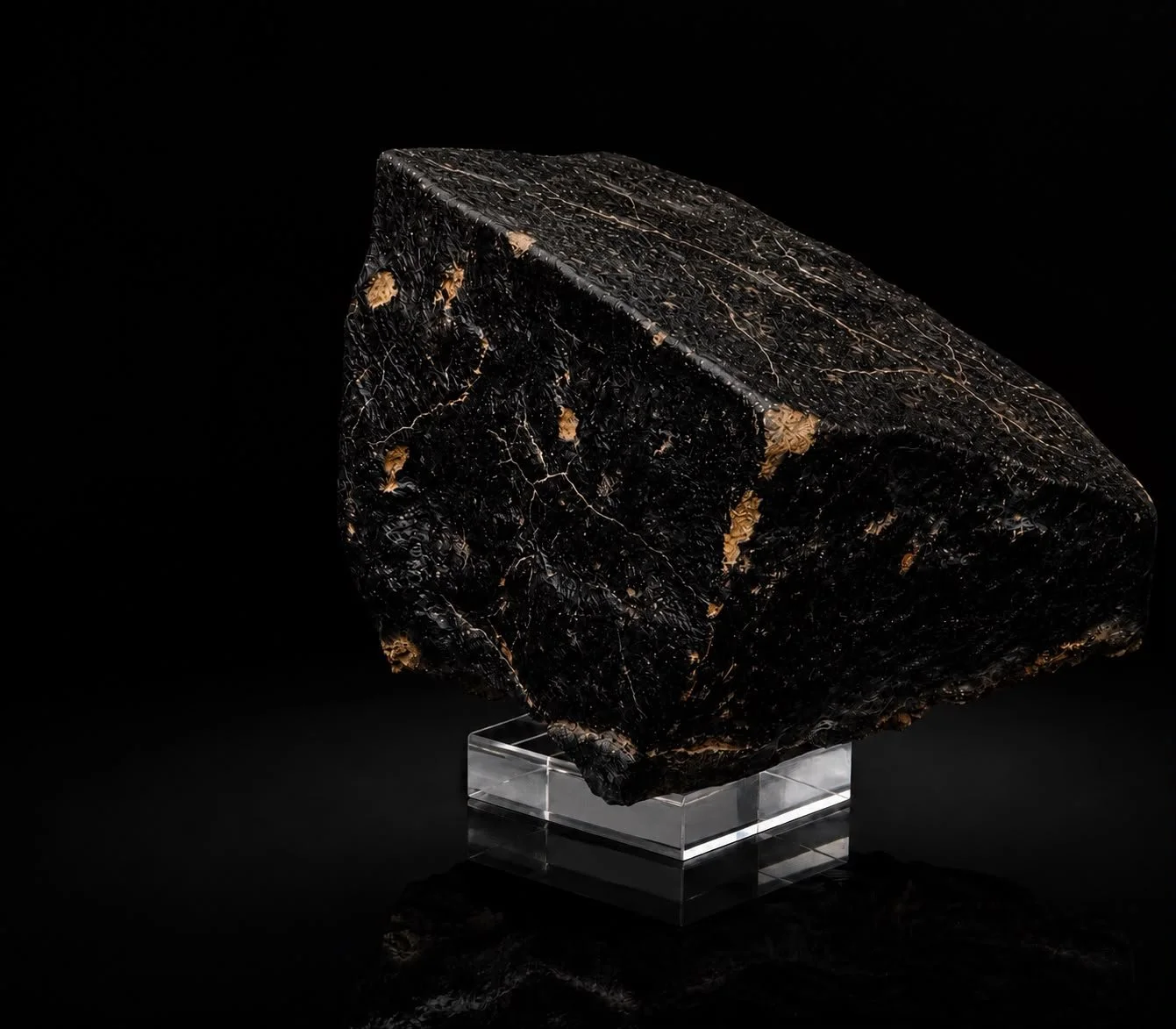
Vaquillas 007 is an HED achondrite, an unbrecciated eucrite, found at Antofagasta in the Atacama Desert, Chile, in November 2023. This specimen weighs 3.976 kg. It has an unusual blocky shape and is almost entirely covered by a well-preserved fusion crust with a pronounced surface texture.
The official find consists of three fully crusted stones with a combined total known mass (TKW) of 11.41 kg. The meteorite was approved by the Meteoritical Society on 24 April 2024 and published in Meteoritical Bulletin No. 113 (2025).
Classification: HED achondrite, unbrecciated eucrite
Mass: 3.976 kg (total known mass 11.41 kg, 3 stones)
Find or fall: found
Location: Antofagasta, Atacama Desert, Chile
Year: November 2023
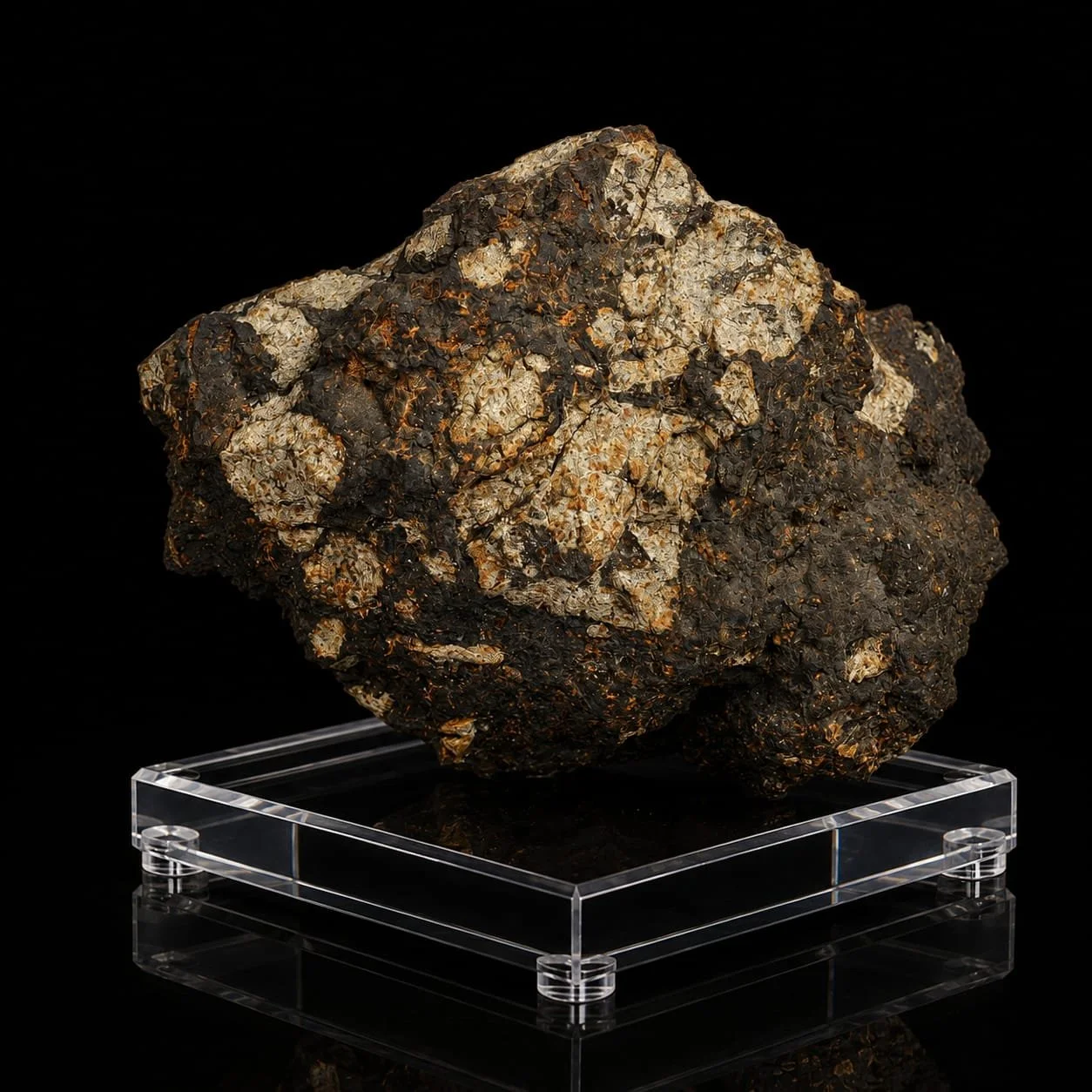
A 5.1 kg specimen of the Chelyabinsk meteorite, an LL5 ordinary chondrite from the observed fall of 15 February 2013 in Chelyabinskaya Oblast, Russia. The meteorite is officially recognised and recorded by the Meteoritical Society in the Meteoritical Bulletin Database.
Classification: ordinary chondrite, LL5
Mass: 5.1 kg (5,100 g)
Shock stage: S4
Weathering grade: W0
Find or fall: observed fall, 15 February 2013
Location: Chelyabinskaya Oblast, Russia
Total recovered mass: approximately 1,000 kg
Meteoritical Bulletin: MB 102 (2013), record No. 57165
Official status: approved, 18 March 2013
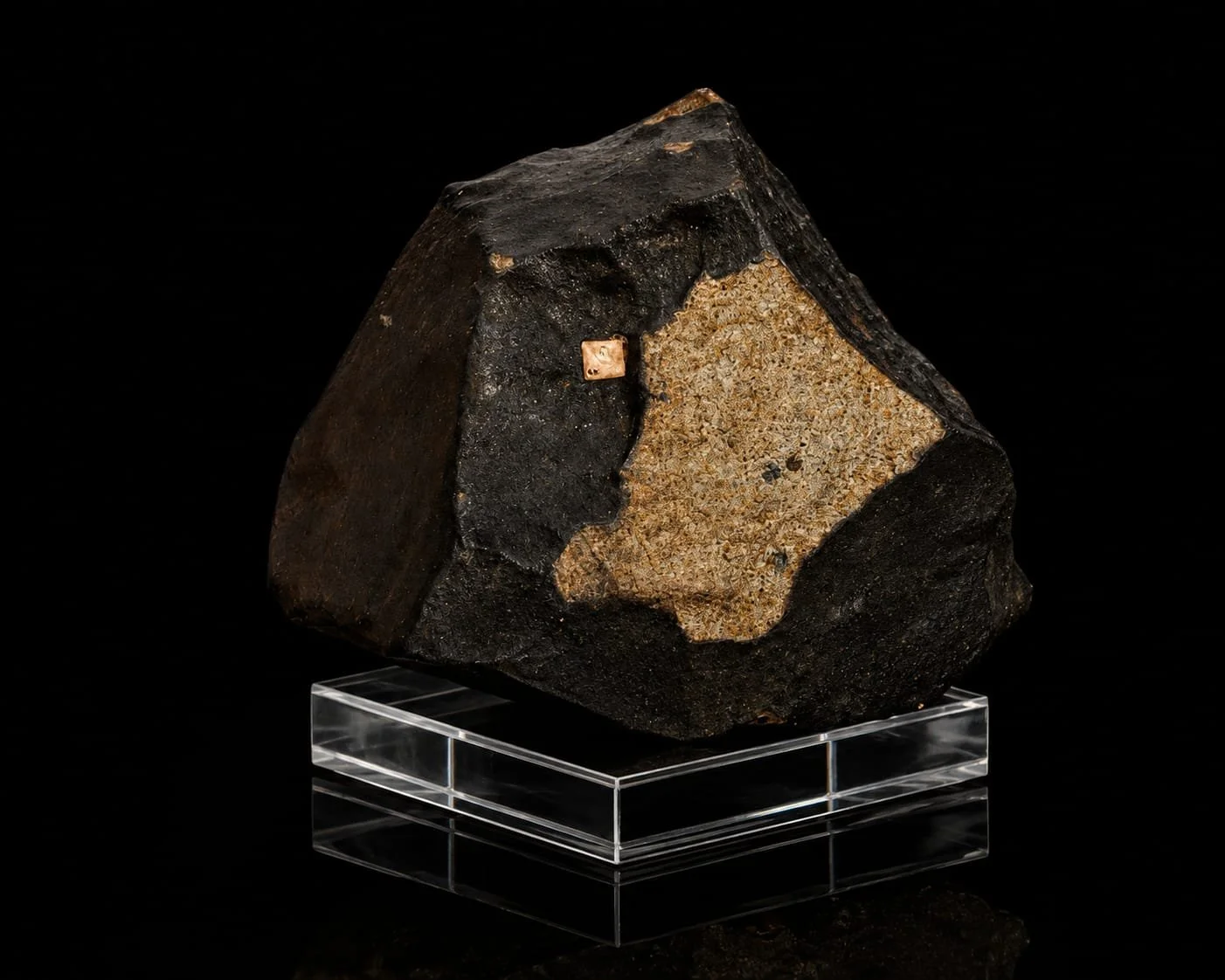
A 2.54 kg specimen of the Zemaitkiemis meteorite (Žemaitkiemis in Lithuanian), an L6 chondrite from the Vilnius University collection. It is in fresh condition (weathering grade W0), with shock stage S1.
The meteorite fell at Zemaitkiemis, Lithuania, on 2 February 1933 at 8.30 p.m. This specimen was recovered within the first few days after the fall.
Classification: chondrite, L6
Mass: 2.54 kg (2,540 g)
Shock stage: S1
Weathering grade: W0
Find or fall: fall, 2 February 1933 at 8.30 p.m.
Location: Zemaitkiemis, Lithuania
Provenance: Vilnius University collection
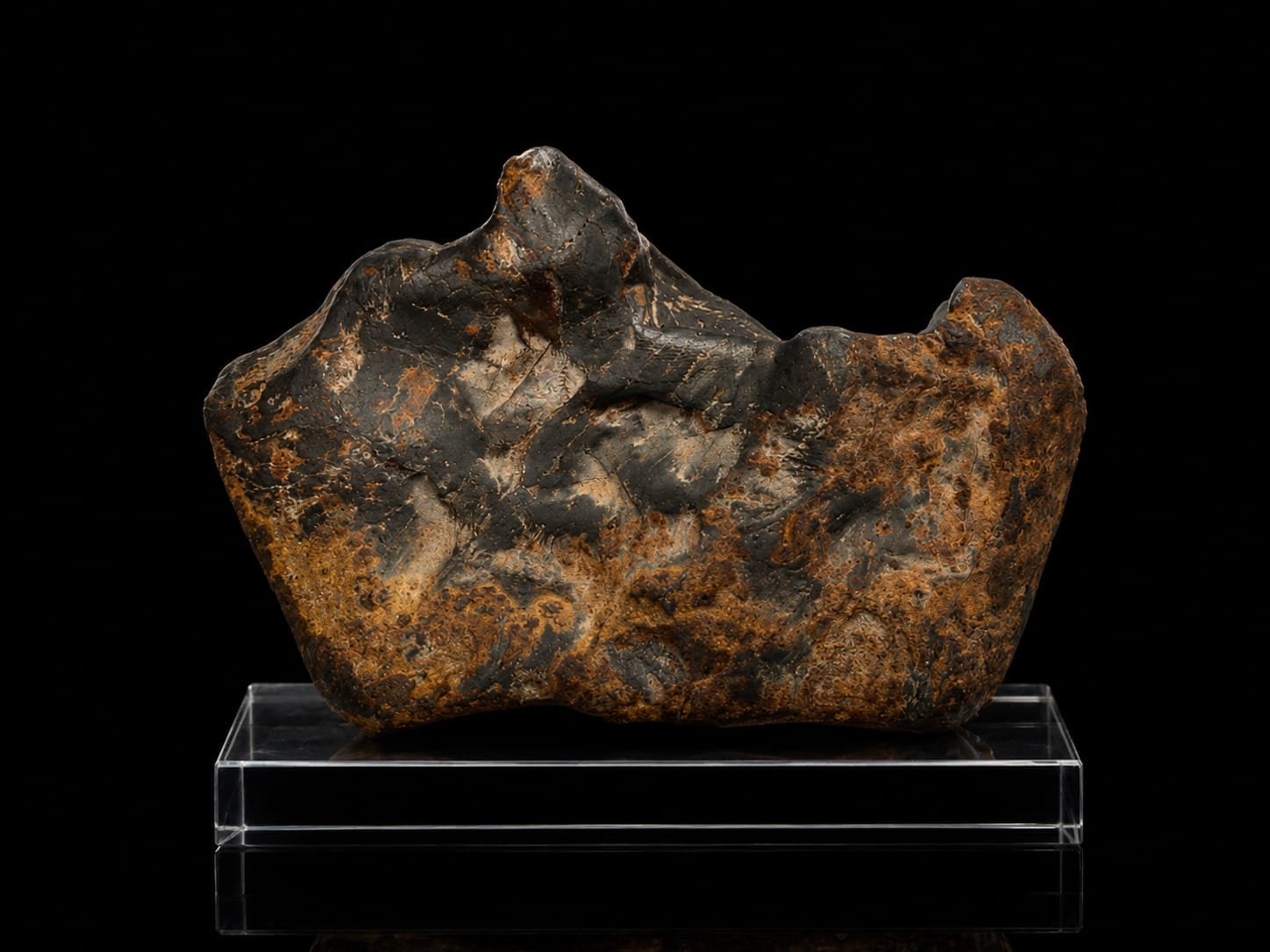
A 577 g specimen of the Imilac pallasite, found during a 2021 expedition to the Imilac meteorite strewn field in the Atacama Desert, Chile. Its composition is atypical: unlike most Imilac pallasites, which contain abundant olivine crystals embedded in an iron-nickel matrix, this specimen is composed entirely of iron, with no olivine inclusions. It has a blue fusion crust, a well-preserved surface formed as the meteorite passed through Earth's atmosphere.
The Atacama Desert is one of the few places on Earth where meteorites can often be found lying directly on the surface. It is the driest desert in the world, where rain falls only once every few decades and sediment accumulates extremely slowly. Against the pale sand and weathered rocks of its wind-swept plains, dark meteorite fragments stand out clearly. Some fell relatively recently, while others have remained on the surface for hundreds or even thousands of years. These stones attracted collectors as early as the 19th century, and one of the earliest famous discoveries was the Imilac meteorite, found in 1822. The cosmic body broke apart in the atmosphere, producing a meteorite shower over an area of approximately 8 km², and prospectors eventually recovered about one tonne of meteorite material.
Classification: pallasite (this specimen entirely iron, with no olivine inclusions)
Mass: 577 g
Find or fall: found
Location: Atacama Desert, Chile
Year: 1822 (first find)
This specimen found: 2021
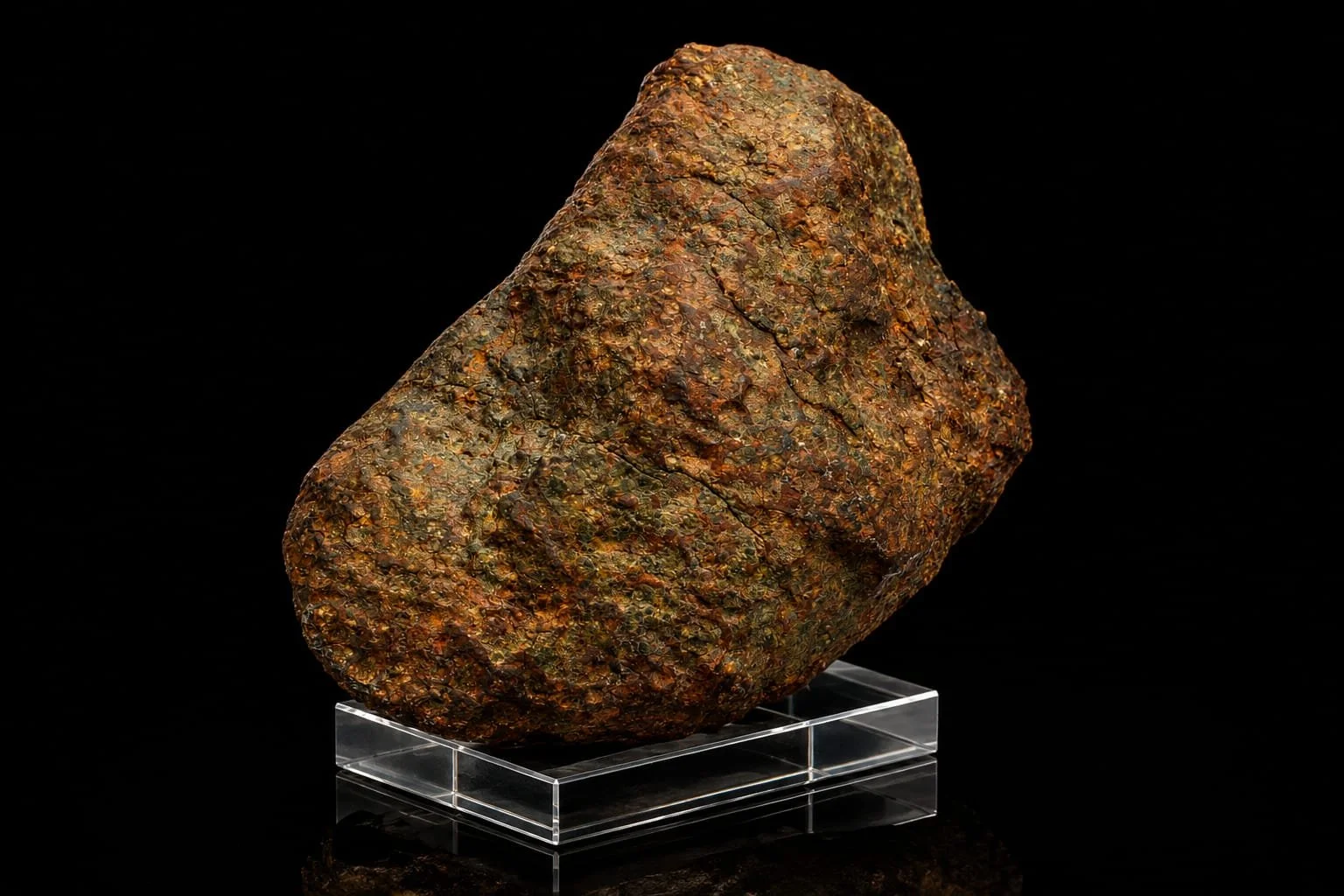
An individual specimen of the Seymchan meteorite, a stony-iron of the pallasite class, classified within the Pallasite Main Group (PMG). It was found in 1967 in Magadan Oblast, Russia, and weighs 10.7 kg.
The meteorite consists primarily of nickel-iron (kamacite, taenite and plessite) and olivine. Minor accessory minerals include troilite, schreibersite, chromite and whitlockite. Its chemical composition is notable for an anomalously high iridium content for the Main Group of pallasites.
One of the characteristic features of the Seymchan meteorite is the extremely uneven distribution of olivine inclusions within the nickel-iron matrix. As a result, collections may contain both almost entirely metallic fragments displaying the Widmanstätten pattern characteristic of iron meteorites of the octahedrite class, and specimens containing olivine, sometimes in substantial quantities, which demonstrates its classification as a pallasite. This structural heterogeneity played an important role in the history of the discovery and study of the meteorite.
Classification: stony-iron, pallasite, Pallasite Main Group (PMG)
Mass: 10.7 kg
Find or fall: found
Location: Magadan Oblast, Russia
Year: 1967
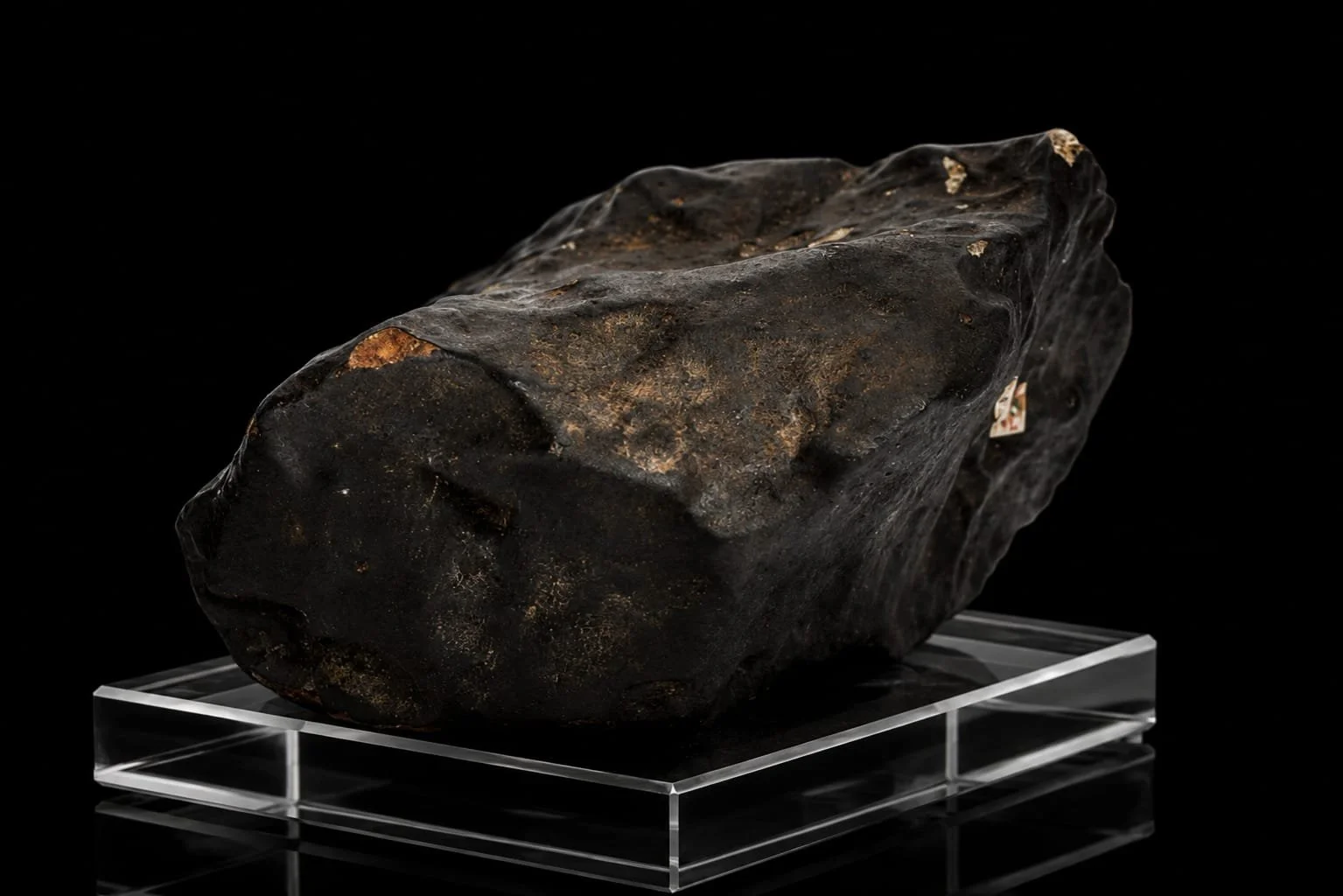
A 1.53 kg specimen of the Zemaitkiemis meteorite (Žemaitkiemis in Lithuanian), an L6 chondrite from the Vilnius University collection. It is in fresh condition (weathering grade W0), with shock stage S1.
The meteorite fell at Zemaitkiemis, Lithuania, on 2 February 1933 at 8.30 p.m. This specimen was recovered within the first few days after the fall.
Classification: chondrite, L6
Mass: 1.53 kg (1,530 g)
Shock stage: S1
Weathering grade: W0
Find or fall: fall, 2 February 1933 at 8.30 p.m.
Location: Zemaitkiemis, Lithuania
Provenance: Vilnius University collection

A 6 kg individual of the Muonionalusta iron meteorite, recovered in northern Sweden in 2026. The surface is rugged and strongly textured after prolonged exposure in the Arctic landscape, and the silhouette is irregular, cut by impact, ice and time.
Muonionalusta is classified as a fine octahedrite of the IVA chemical group. Its material formed during the earliest history of the Solar System, approximately 4.56 billion years ago.
Classification: iron meteorite, IVA chemical group, fine octahedrite
Mass: 6 kg
Find or fall: found, no observed fall
Location: Pajala, Norrbotten County, northern Sweden
This specimen recovered: 2026
Available for private acquisition.

A collection of Muonionalusta iron meteorites with a total weight of approximately 300 kg, recovered in 2026 at Pajala, Norrbotten County, in northern Sweden, during an organised meteorite-hunting expedition.
Muonionalusta is an iron meteorite of the IVA chemical group; its structural class is fine octahedrite.
Classification: iron meteorite, IVA chemical group, fine octahedrite
Mass: approximately 300 kg (total for the collection)
Location: Pajala, Norrbotten County, northern Sweden
Recovered: 2026
Provenance: recovered directly during an organised meteorite-hunting expedition
Some love stories begin among the stars — the universe resting in my hands

The Chelyabinsk meteorite — a star of the Gems & Carvings collection
Meteorites are among the oldest materials we can physically touch. Formed during the earliest history of the Solar System, many are approximately 4.5 billion years old — older than Earth itself.
These extraordinary objects are surviving fragments of asteroids and planetary bodies. Their mineralogy, chemical composition and internal structures preserve evidence of the processes that formed our Solar System.
At GEMS & CARVINGS, we approach meteorites through science, provenance, rarity and art. Our meteorite collection focuses on authentic meteorites selected for their scientific significance, documented origin, exceptional structure and aesthetic quality.
Private acquisition enquiries are welcome.
Meteorite hunting, Expeditions & Science
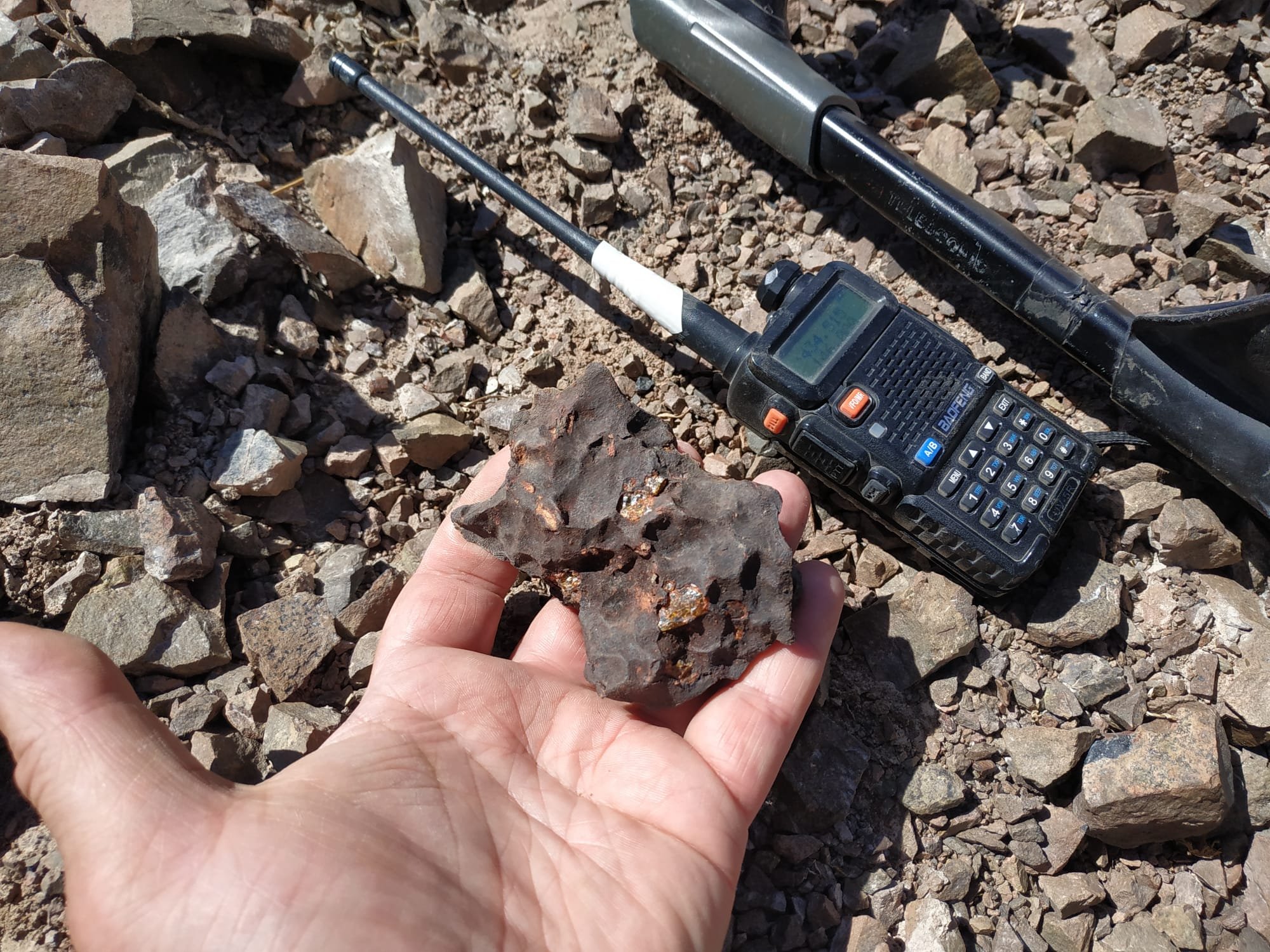
Meteorites are not simply collected — they are discovered through knowledge, persistence and an understanding of the landscapes in which they survive.
Professional meteorite hunting and expeditions combine field experience, navigation, geology and careful observation. Potential discoveries must then move from the field into science, where meteorite identification, analysis and classification establish their extraterrestrial origin and scientific significance.
Every authenticated meteorite therefore carries two interconnected histories: its ancient journey through space and the documented story of its discovery on Earth.
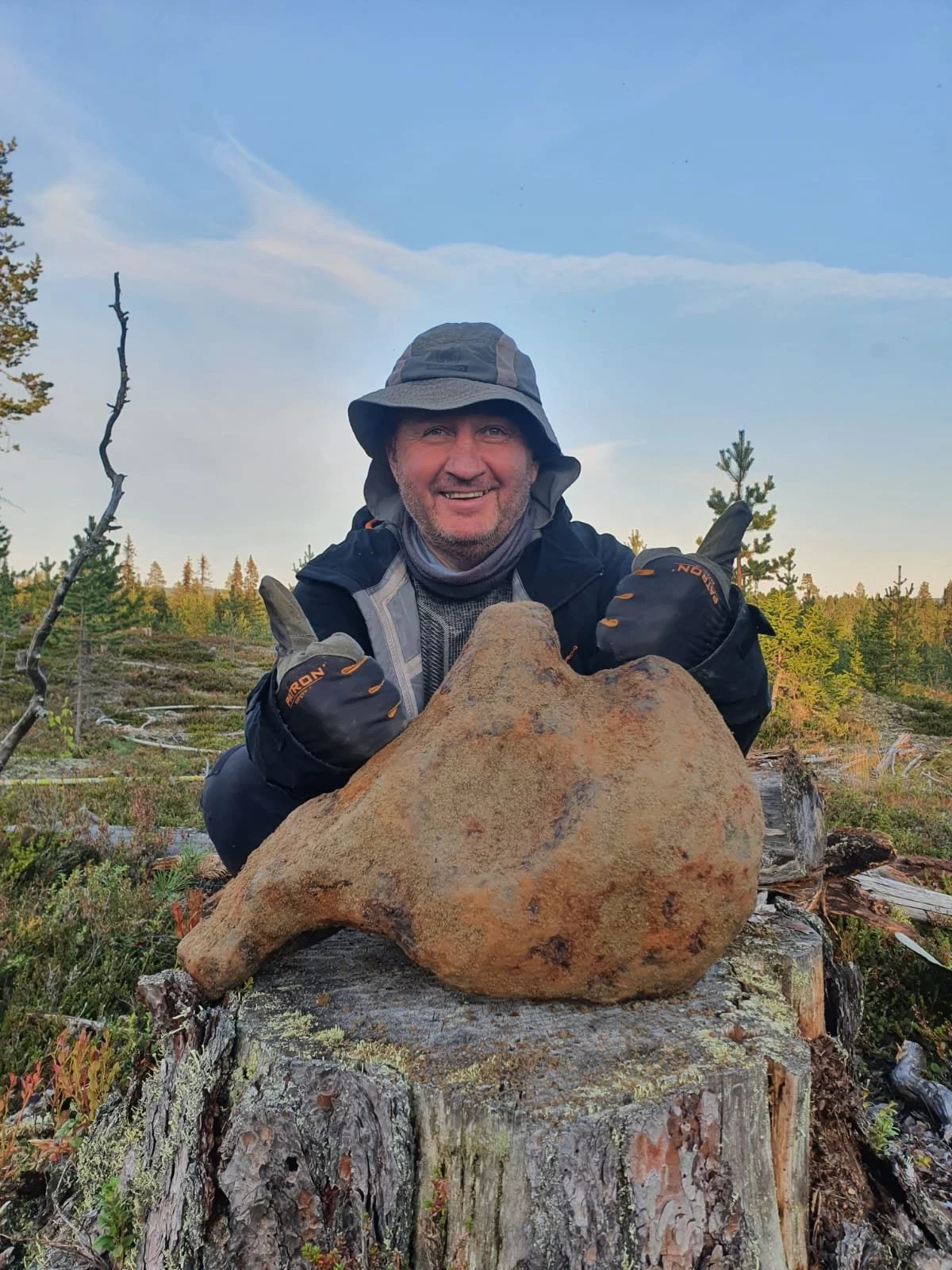
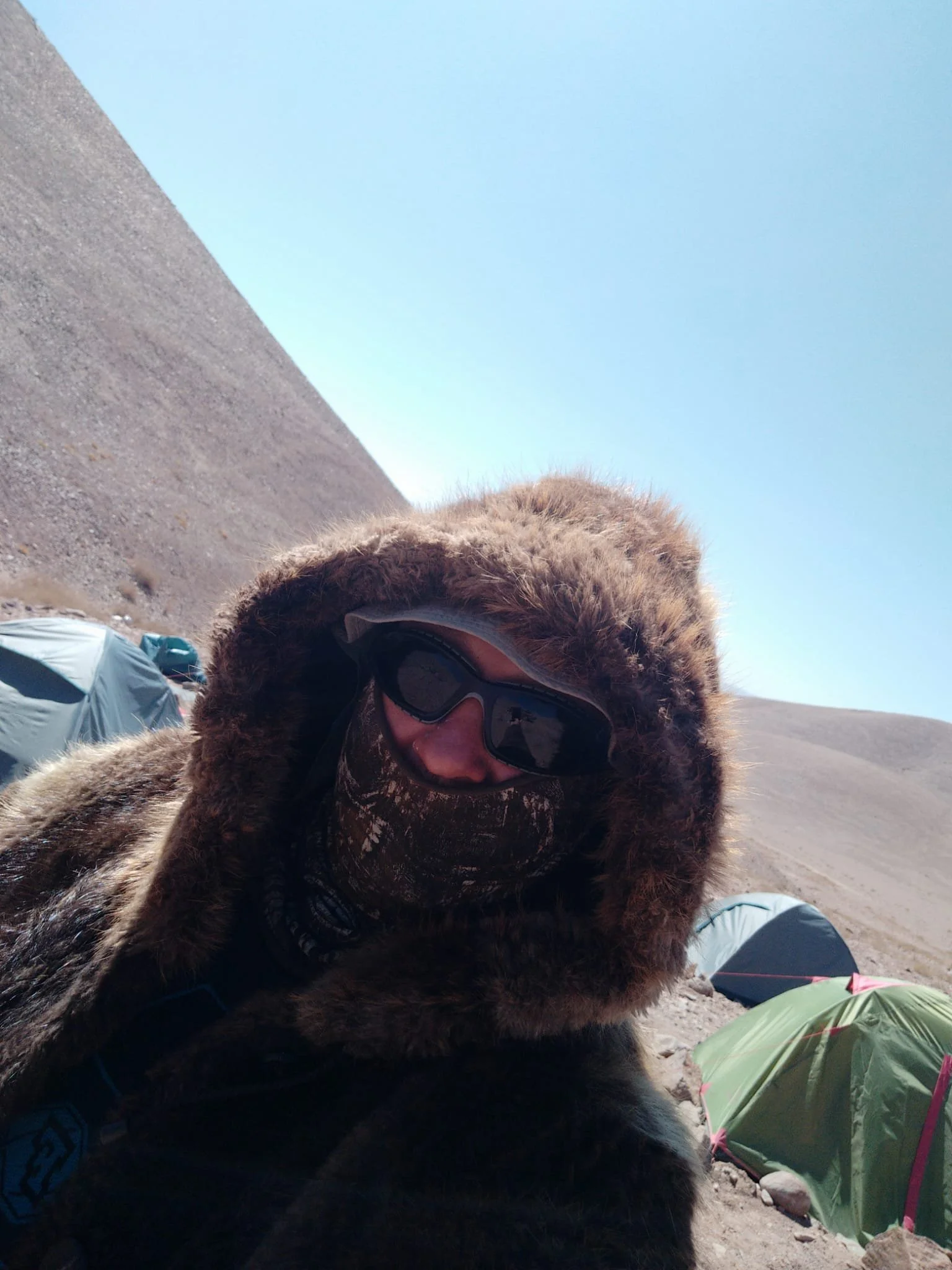
Mikhail Ivanov
Meteorite Hunter · Geologist · Explorer
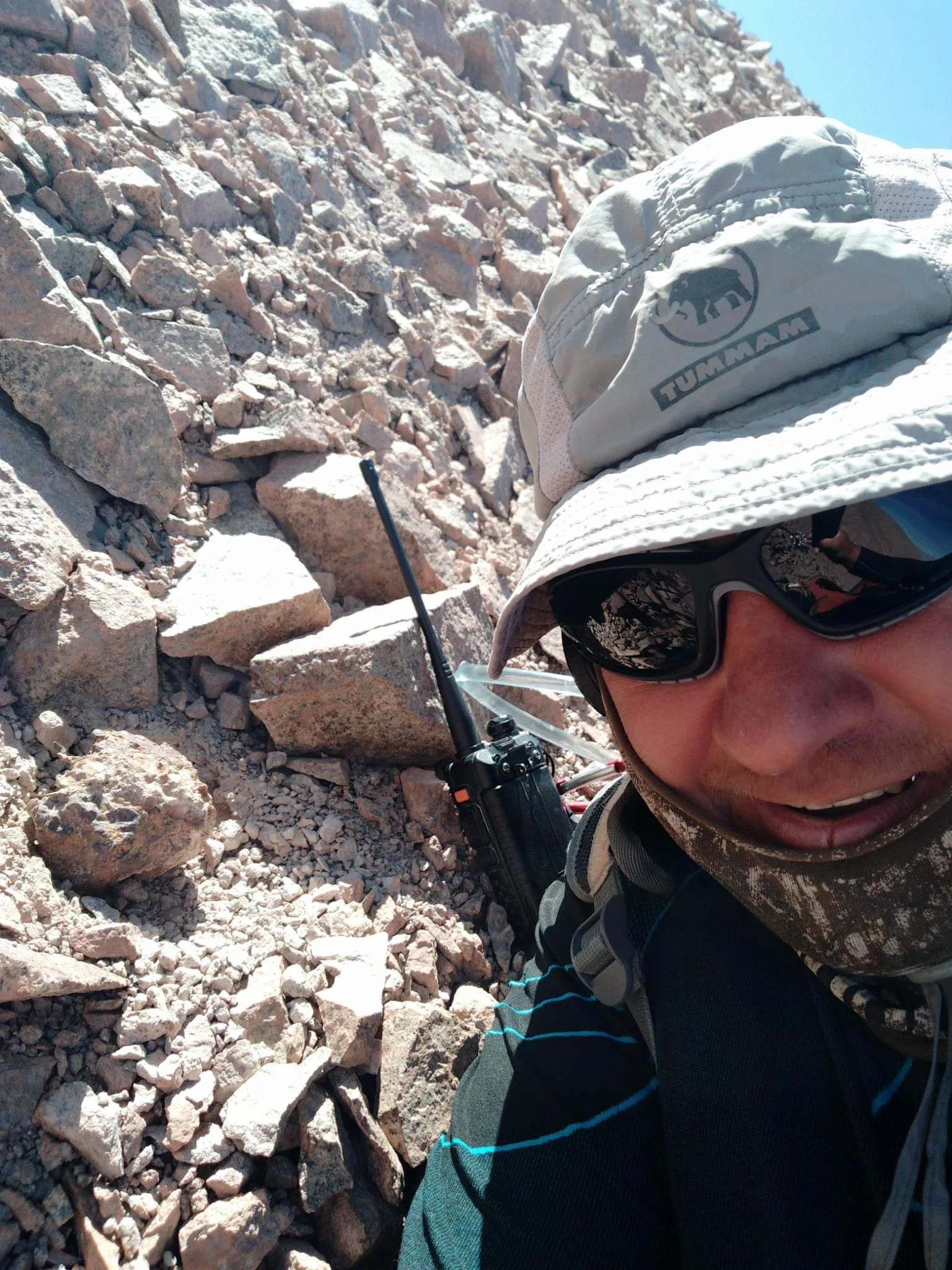
Mikhail Ivanov is a Vilnius-based geologist, meteorite hunter and internationally recognised member of the International Meteorite Collectors Association (IMCA #8093).
Holding a Master’s degree in Geology with a specialisation in Cosmic Petrology and Meteorite Science, Mikhail has devoted nearly two decades to the study, discovery and identification of extraterrestrial material.
Since 2008, meteorites have taken him far beyond the laboratory and into some of the world's most remote landscapes. Together with a dedicated expedition team, he has undertaken numerous field expeditions across continents — from the vast expanses of the Atacama Desert to northern Sweden and the remote wilderness of Magadan.
Many of these expeditions have resulted in significant discoveries, bringing previously unknown or exceptionally rare specimens of extraterrestrial material into scientific study and distinguished private collections.
Each meteorite carries an extraordinary provenance. Formed billions of years ago — some predating the Earth itself — these fragments travelled through space before their remarkable arrival on our planet.
Mikhail's work combines scientific knowledge, field experience and the instinct of a true explorer, allowing him to recognise, recover and document material that represents some of the oldest tangible matter humanity can hold.
Through GEMS & CARVINGS, selected meteorites associated with his expeditions are presented not simply as specimens, but as rare natural works of cosmic history — objects of scientific significance, exceptional provenance and enduring fascination.
-
Meteorites are scientifically classified according to their composition and origin. They include iron meteorites, stony meteorites, stony-iron meteorites and pallasite meteorites, as well as exceptionally rare lunar meteorites and Martian meteorites.
Pallasites are among the most visually remarkable, with translucent olivine crystals embedded within an iron-nickel matrix. Lunar and Martian meteorites represent material ejected from the surfaces of the Moon or Mars by major impacts before travelling through space and eventually reaching Earth.
For serious collectors seeking rare meteorites, certified meteorites, collectible meteorites and museum-quality meteorites, provenance and scientific classification are fundamental.
Appearance alone does not determine importance. Classification, rarity, discovery history, condition, scientific significance and documentation distinguish an exceptional specimen from ordinary material.
-
The Atacama Desert is one of Earth's most extraordinary environments for meteorite hunting. Its extreme aridity, ancient exposed surfaces and sparse vegetation allow extraterrestrial material to survive for exceptionally long periods. But meteorite discovery is not simply a matter of luck.
Professional meteorite expeditions demand field experience, navigation, geological observation and the ability to distinguish terrestrial rocks from genuine extraterrestrial specimens.
GEMS & CARVINGS has a particular connection with Atacama meteorites and with the experience of searching for them in the landscape itself.
Every documented discovery connects an object to a precise place and moment on Earth — after a journey through space that may have lasted millions of years.
-
For collectors looking to buy meteorites, authenticity should always come before spectacle. The most desirable specimens combine rarity, recognised classification, provenance, preservation, aesthetic quality and scientific significance. Exceptional historic meteorites and specimens with distinguished provenance occupy an entirely different category from common commercial material. Potential investment meteorites should therefore be considered carefully. Long-term significance depends upon documentation, recognised classification, quality, rarity and provenance — not simply a claim that something is unusual.
GEMS & CARVINGS presents meteorites selectively, concentrating on genuine meteorites, rare meteorite specimens, meteorite fragments, meteorite slices and exceptional space collectibles suitable for discerning private collections and potential institutional interest.
Older Than Our World
Gemstones are created by Earth.
Meteorites come from beyond it.
To hold a genuine meteorite is to hold surviving material from the formation of our Solar System — matter that existed before Earth's landscapes, oceans and continents took their present form. That is what gives an exceptional meteorite its significance. Not mythology. Not imitation.
Matter. Time. Provenance. Discovery.